|
TRANSLATE THIS ARTICLE
Integral World: Exploring Theories of Everything
An independent forum for a critical discussion of the integral philosophy of Ken Wilber
  Frank Visser, graduated as a psychologist of culture and religion, founded IntegralWorld in 1997. He worked as production manager for various publishing houses and as service manager for various internet companies and lives in Amsterdam. Books: Ken Wilber: Thought as Passion (SUNY, 2003), and The Corona Conspiracy: Combatting Disinformation about the Coronavirus (Kindle, 2020). Frank Visser, graduated as a psychologist of culture and religion, founded IntegralWorld in 1997. He worked as production manager for various publishing houses and as service manager for various internet companies and lives in Amsterdam. Books: Ken Wilber: Thought as Passion (SUNY, 2003), and The Corona Conspiracy: Combatting Disinformation about the Coronavirus (Kindle, 2020).
Check out my other conversations with ChatGPT Don Beck's 9/11 Response RevisitedIntegral Diagnosis or Civilizational Simplification?Frank Visser / ChatGPT
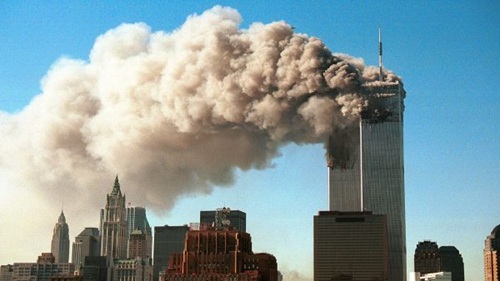 A Spiral Dynamics Lens on CatastropheIn his essay "The Global Great Divide", written immediately after the September 11 attacks, Don Edward Beck attempts something ambitious: not a geopolitical analysis in the conventional sense, but a civilizational diagnosis grounded in his Spiral Dynamics framework. Rather than interpreting 9/11 as a discrete act of terrorism or a clash of states, Beck reframes it as a manifestation of deeper “value system” conflicts. He argues that the post-Cold War world has exposed a “Global Great Divide” between different developmental layers—what he calls “ancients,” “moderns,” and “postmoderns.” This move is characteristic of integral thinking: it shifts explanation away from material causes (policy, economics, strategy) toward underlying cultural “codes,” likened to a kind of social DNA. Terrorism, in this view, is not just political violence but a symptom of misaligned developmental stages. From Cold War to Culture WarBeck's central claim is that the Cold War masked deeper tensions. Once it ended, suppressed ethnic, religious, and civilizational conflicts resurfaced with new intensity. 9/11 thus signals not a new war between nations, but a conflict between worldviews coexisting in the same global space. He frames the divide starkly. On one side stand “ancients”: tribal, absolutist, often religiously driven systems that assert exclusive truth claims. On the other side are “moderns”: secular, technologically advanced, market-oriented societies. Postmoderns, meanwhile, are portrayed as well-meaning but fragile—ill-equipped to survive violent upheaval. This typology allows Beck to interpret Islamist terrorism as an eruption of “ancient” value systems reacting against modernity. The attack is thus not merely strategic but developmental—a clash between historical epochs compressed into the same moment. The Virus Metaphor and Policy ImplicationsOne of Beck's more striking conceptual moves is his analogy between terrorism and a virus. Unlike traditional warfare (“bacteria”), terrorism mutates, spreads invisibly, and cannot be eliminated through conventional military means. This leads him to reject purely military responses. Instead, he proposes a multi-layered strategy: • differentiate between extremist and moderate Islam, • support “modernizing” elements within Arab societies, • address poverty and repression as breeding grounds, • combine humanitarian aid with selective force. He even suggests that the real battle will occur within Islamic societies themselves—between “ancients” and “moderns”—rather than between Islam and the West. At a strategic level, this anticipates later “hearts and minds” doctrines and counterinsurgency thinking, though framed in developmental rather than political terms. Strengths: Pattern Recognition Beyond HeadlinesBeck's analysis has genuine strengths. It resists the immediate emotional pull toward retaliation and instead seeks structural causes. His emphasis on internal diversity within Islam—distinguishing extremists from broader populations—is analytically responsible, especially in the charged atmosphere of late 2001. Moreover, his insistence that 9/11 cannot be understood through traditional categories of “war” or “crime” aligns with broader academic critiques that the event disrupted existing conceptual frameworks. His focus on long-term cultural dynamics also highlights something often neglected in policy discourse: that conflicts are sustained by identity systems, not just interests. Weaknesses: Overreach and ReductionismHowever, the essay also reveals the typical liabilities of integral theorizing when applied to geopolitics. First, Beck's developmental categories risk oversimplification. Labeling entire regions or movements as “ancient” versus “modern” compresses complex historical, political, and economic realities into a single axis of psychological evolution. This can obscure concrete causes such as foreign policy grievances, power struggles, and institutional failures. Second, his portrayal of Islamic extremism leans toward sweeping generalization. While he acknowledges diversity within Islam, his language about a “virulent strain” of Arab/Islamic nationalism risks reinforcing the very civilizational binaries he claims to transcend. Third, the framework itself is difficult to falsify. If all actors are expressions of “value systems,” then any outcome can be retrofitted into the model. This weakens its explanatory rigor compared to more empirically grounded approaches. Finally, there is a subtle normative bias: “modernity” is implicitly treated as the developmental endpoint toward which other societies should evolve. This aligns uncomfortably with Western-centric assumptions, even as Beck tries to avoid crude ethnocentrism. Integral Insight or Grand Narrative?Beck's response exemplifies both the appeal and the danger of integral analysis. It offers a wide-angle lens that connects disparate phenomena into a coherent narrative. But that coherence comes at the cost of granularity. In effect, Beck replaces geopolitical reductionism (“they hate us for our freedom”) with developmental reductionism (“they are at an earlier stage of value evolution”). Both simplify reality, albeit at different levels of sophistication. Conclusion: A Visionary Frame with LimitsDon Beck's first response to 9/11 is best read as a conceptual intervention rather than a policy guide. It captures the intuition that the post-Cold War world is defined by deep cultural fault lines, not just state rivalries. It also anticipates the inadequacy of purely military responses to decentralized terrorism. Yet its reliance on broad developmental categories limits its explanatory precision. By translating geopolitical conflict into psychological stages, it risks flattening the very complexity it seeks to illuminate. In the end, Beck's essay is a revealing artifact of early 21st-century integral thought: ambitious, pattern-seeking, and morally earnest—but prone to overgeneralization when confronting the messy realities of global politics.
Comment Form is loading comments...
|