|
TRANSLATE THIS ARTICLE
Integral World: Exploring Theories of Everything
An independent forum for a critical discussion of the integral philosophy of Ken Wilber
  Frank Visser, graduated as a psychologist of culture and religion, founded IntegralWorld in 1997. He worked as production manager for various publishing houses and as service manager for various internet companies and lives in Amsterdam. Books: Ken Wilber: Thought as Passion (SUNY, 2003), and The Corona Conspiracy: Combatting Disinformation about the Coronavirus (Kindle, 2020). Frank Visser, graduated as a psychologist of culture and religion, founded IntegralWorld in 1997. He worked as production manager for various publishing houses and as service manager for various internet companies and lives in Amsterdam. Books: Ken Wilber: Thought as Passion (SUNY, 2003), and The Corona Conspiracy: Combatting Disinformation about the Coronavirus (Kindle, 2020).
Check out my other conversations with ChatGPT Ken Wilber's 9/11 Response RevisitedReframing War as a Developmental ConflictFrank Visser / ChatGPT
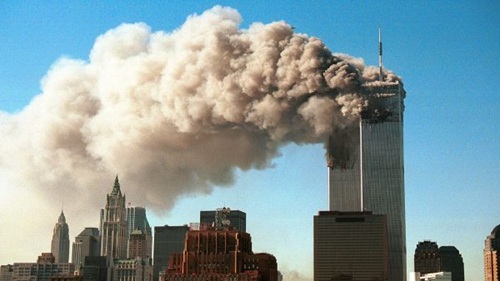 Ken Wilber's central move in "The War In Iraq" is to recast the Iraq War not as a geopolitical event but as a clash between developmental value systems, drawing on Spiral Dynamics within his broader AQAL framework. In this view, the main actors in the debate are not nations or institutions but psychological worldviews: “blue” moral absolutism in the rhetoric of good versus evil, “orange” modern pragmatism concerned with stability and markets, and “green” postmodern pluralism expressed in anti-war protest. Hovering above these is “yellow,” or second-tier consciousness, which supposedly integrates the partial truths of the lower stages. This reframing has some explanatory power. It helps clarify why public discourse around the war was so polarized and why opposing camps often seemed unable to communicate. Yet the cost of this move is significant. By translating concrete historical and political dynamics into a typological scheme, Wilber largely bypasses the empirical substance of the conflict—questions about intelligence failures, oil interests, international law, and regional history. The war becomes a case study in consciousness rather than a problem requiring factual analysis. The “Second-Tier” Ambiguity on WarWilber's treatment of the war itself is deliberately ambivalent. He argues that from a second-tier perspective there are valid reasons both to support and to oppose the invasion. This allows him to position himself above the polarized debate, presenting nuance as a function of higher development. However, this stance raises a critical issue. The appeal to “second-tier” judgment lacks operational criteria. It is never clearly specified what evidence or reasoning would decisively justify war or rule it out. As a result, the position risks becoming unfalsifiable. Any outcome can be retrospectively framed as consistent with an integral perspective, which undermines its usefulness as a guide to action. What appears as sophistication can just as easily function as a form of strategic indeterminacy. Moral Equivalence—But Not QuiteWilber attempts to strike a balanced tone by asserting that both Saddam Hussein's regime and the U.S.-led invasion are unacceptable from a higher, worldcentric standpoint. In principle, this suggests a form of moral symmetry. Yet in practice, his rhetoric does not sustain that balance. Anti-war protesters are criticized as effectively enabling Saddam by failing to oppose his abuses with equal force. This introduces a tension at the heart of the essay. While claiming to transcend one-sidedness, Wilber ends up pathologizing one side of the debate more than the other. The anti-war position is reduced to “green” relativism, whereas the pro-war stance is granted partial legitimacy through its supposed alignment with second-tier concerns. The result is not a neutral synthesis but a subtly asymmetrical evaluation. Tony Blair as the “Integral” LeaderA striking feature of the essay is Wilber's elevation of Tony Blair as a rare example of integral leadership. Blair is portrayed as someone capable of holding multiple perspectives at once, mediating between the United States and Europe, and navigating the complexities of the situation with a higher-order awareness. This assessment rests almost entirely on inferred psychological depth rather than on verifiable outcomes or evidence. In retrospect, the praise appears particularly questionable given the subsequent controversies surrounding the Iraq War, including flawed intelligence and legal disputes. More broadly, the move illustrates a recurring pattern in Wilber's work: political figures are evaluated according to presumed levels of consciousness rather than the empirical consequences of their decisions. The Utopian Detour: World FederationA significant portion of the essay shifts away from the Iraq War itself and toward a speculative vision of global governance. Wilber proposes the need for a second-tier “World Federation” that could function as a kind of global police force, enforcing worldcentric norms and intervening in cases such as genocide. The underlying concern is legitimate. Modern crises often exceed the capacity of nation-states, and the absence of effective global institutions is a real problem. Yet Wilber's proposed solution remains abstract and underdeveloped. It lacks institutional detail, political feasibility, and engagement with existing international structures. The idea operates more as a philosophical ideal than as a workable policy framework. The Retreat into Interior PracticeAfter traversing global politics and speculative governance, Wilber concludes by emphasizing the importance of individual consciousness development. The ultimate response to global disorder, in his view, lies in cultivating higher awareness within oneself. While consistent with his broader philosophy, this move has a deflationary effect in the context of a concrete political crisis. It shifts attention from collective decision-making and accountability to personal spiritual practice. In doing so, it risks functioning as a form of disengagement, where the complexities of political responsibility are dissolved into the more manageable domain of inner growth. Overall EvaluationWilber's response to the Iraq War is best understood as an application of his integral framework rather than as a substantive analysis of the conflict. It succeeds in highlighting the psychological and ideological fragmentation of public discourse, offering a lens through which to interpret competing narratives. At the same time, it struggles to engage with the empirical realities of the situation or to provide clear normative guidance. The essay illustrates both the strengths and limitations of Integral Theory. Its capacity to map perspectives is evident, but its ability to adjudicate between them in a grounded, evidence-based manner remains weak. In the end, the Iraq War becomes less a historical event to be understood on its own terms and more a stage on which Wilber's theoretical system performs—illuminating in parts, but ultimately detached from the realities it seeks to explain.
Comment Form is loading comments...
|