|
TRANSLATE THIS ARTICLE
Integral World: Exploring Theories of Everything
An independent forum for a critical discussion of the integral philosophy of Ken Wilber
  Frank Visser, graduated as a psychologist of culture and religion, founded IntegralWorld in 1997. He worked as production manager for various publishing houses and as service manager for various internet companies and lives in Amsterdam. Books: Ken Wilber: Thought as Passion (SUNY, 2003), and The Corona Conspiracy: Combatting Disinformation about the Coronavirus (Kindle, 2020). Frank Visser, graduated as a psychologist of culture and religion, founded IntegralWorld in 1997. He worked as production manager for various publishing houses and as service manager for various internet companies and lives in Amsterdam. Books: Ken Wilber: Thought as Passion (SUNY, 2003), and The Corona Conspiracy: Combatting Disinformation about the Coronavirus (Kindle, 2020).
Check out my other conversations with ChatGPT Craig Venter and the Industrialization of LifeHow Genomics Became Big ScienceFrank Visser / ChatGPT
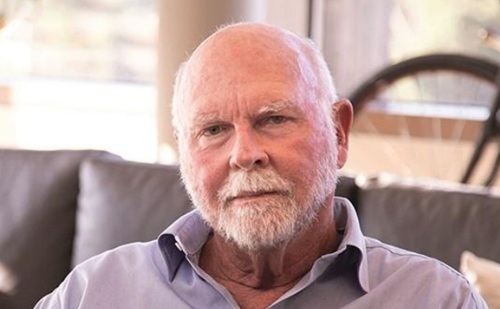 The death of J. Craig Venter on April 29, 2026, at the age of 79 marks the passing of one of the most consequential—and controversial—figures in modern biology. His relevance is not confined to a single breakthrough; rather, it lies in how he reshaped the style, speed, and philosophical scope of biological science. Venter did not merely contribute to genomics—he helped transform it into a high-throughput, data-driven, and entrepreneurial enterprise. The Acceleration of BiologyVenter's most visible achievement was his role in sequencing the human genome. In the late 1990s, he led a private effort through Celera Genomics that competed directly with the publicly funded Human Genome Project. This was not just a scientific race; it was a methodological revolution. Venter championed “shotgun sequencing,” a faster, more computationally intensive approach that bypassed slower, hierarchical mapping strategies. The result was not only a draft of the human genome but a proof-of-concept: biology could now operate at industrial scale. Sequencing, once painstaking and artisanal, became automated and massively parallel. This shift laid the groundwork for today's genomics ecosystem—personalized medicine, large-scale biobanks, and the routine sequencing of pathogens. In that sense, Venter's relevance persists every time a genome is sequenced in hours rather than years. The Entrepreneurial Turn in ScienceEqually significant was Venter's role in blurring the boundary between public science and private enterprise. By launching a commercial genome project, he forced a confrontation over intellectual property, data access, and the ownership of life's basic information. Critics accused him of attempting to privatize the genome; supporters argued that his competition accelerated progress. Both views are correct. Venter injected market dynamics into a domain previously dominated by state-funded research, and in doing so, he changed the incentive structure of biology itself. Today's biotech landscape—venture-backed startups, genomic patents, and platform-driven biology—owes much to this shift. Venter did not invent the commercialization of science, but he normalized it at the genomic scale. From Reading to Writing LifeIf sequencing the genome was about reading life, Venter's later work moved toward writing it. He and his collaborators created one of the first cells controlled by a synthetic genome, and later developed minimal genomes stripped down to essential genes. This was more than a technical feat. It signaled a conceptual transition: life was no longer just an object of study but a system that could be engineered. Synthetic biology, now a major field, rests on this premise. Here, Venter's relevance becomes philosophical. By demonstrating that a genome could be synthesized and “booted up” in a cell, he weakened traditional distinctions between natural and artificial life. The question shifted from “What is life?” to “What can life be made to do?” The Metagenomic Expansion of LifeAnother, less publicly celebrated contribution was Venter's work in metagenomics—sampling genetic material directly from environments such as the ocean. His global ocean sampling expeditions revealed vast numbers of previously unknown genes and microbial species. This expanded the known biosphere dramatically. Life was no longer a catalog of discrete organisms but a dynamic, largely invisible genetic continuum. In contemporary biology, where microbial ecosystems are understood to regulate climate, health, and biogeochemical cycles, this shift is foundational. The Provocateur as Scientific TypeVenter's personality was inseparable from his impact. He was frequently described as a provocateur and a force of nature, someone who thrived on controversy and competition. This matters because it highlights a broader transformation in the sociology of science. Venter embodied a new archetype: the scientist-entrepreneur who operates simultaneously in academia, industry, and public discourse. He cultivated visibility, challenged institutional norms, and treated science as both intellectual and strategic terrain. In a field often idealized as purely rational and collaborative, Venter reintroduced rivalry, ego, and ambition as explicit drivers of discovery. Limits and CritiquesYet his legacy is not unambiguous. The promise of genomics has often outpaced its clinical delivery. Despite the sequencing revolution, translating genetic knowledge into therapies has proven slower and more complex than anticipated. Venter himself acknowledged that understanding biological systems lags behind data generation. Moreover, the ethical tensions he amplified—around data ownership, genetic privacy, and bioengineering—remain unresolved. His career illustrates both the power and the ambiguity of technological acceleration: more capability does not automatically yield more understanding or better outcomes. Conclusion: A Catalyst Rather Than a ClosureCraig Venter's enduring relevance lies less in any single discovery than in his catalytic role. He accelerated genomics, commercialized biology, pioneered synthetic life, and expanded the known genetic world. He helped shift biology from a descriptive science to an engineering discipline. But perhaps his deepest significance is methodological. Venter showed that biology could be scaled, digitized, and contested—turned into a domain where speed, computation, and strategy matter as much as theory. That transformation continues to define the life sciences today. His death closes a chapter, but the paradigm he helped create is still unfolding.
Comment Form is loading comments...
|